Chapter 01 · 1895
The Beginning of Adventist Work in India
Where the Journey Began
The story of Oriental Watchman Publishing House is closely connected with the beginnings of the Seventh-day Adventist work in India.
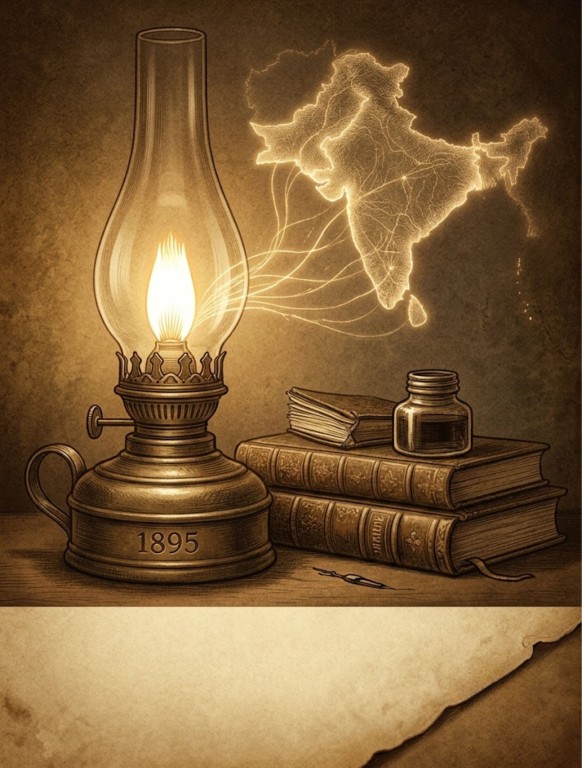
In 1895, the first Seventh-day Adventist mission in India was established at 154 Bow Bazaar Street, Calcutta. Soon, attention turned to literature. Books, tracts, and periodicals could travel where people could not, carrying messages of faith and hope across cities, towns, and villages.
Chapter 02 · 1896
A Literature Ministry Takes Root
The First Pages
In 1896, the International Tract Society was established with the vision of spreading the Gospel through printed literature.
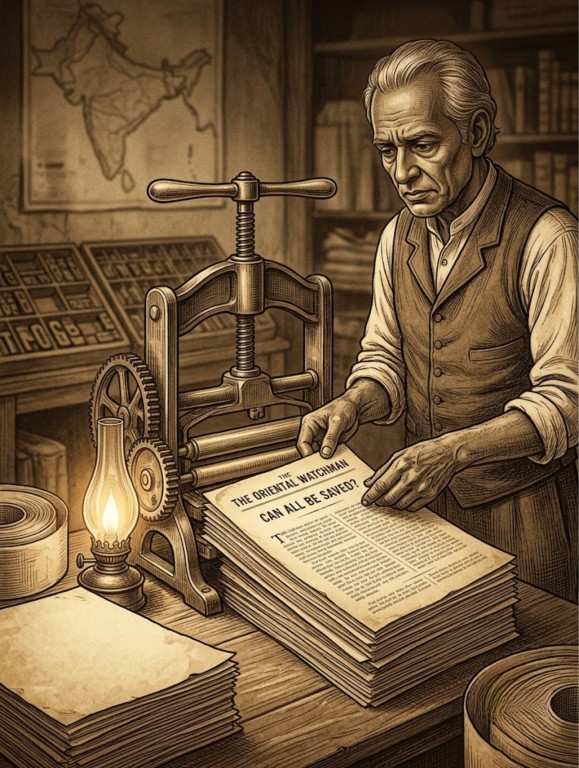
Among the earliest publications was International Series No. 1, a four-page tract titled “Can All Be Saved?” Later that same year, a Bengali tract featuring Ellen G. White’s “The Coming of Christ” was published. A publishing tradition had begun.
Chapter 03 · 1898
The Oriental Watchman
A Voice Begins to Travel
In 1898, William Ambrose Spicer arrived in India to serve as editor of the International Tract Society. Under his leadership, The Oriental Watchman began regular publication as a 16-page monthly magazine.
The first edition consisted of 1,500 copies, initially distributed free of charge. What began as a modest publication became an important voice for the growing Adventist community in India.
Chapter 04 · 1903
The First Publishing Press
From Borrowed Presses to Our Own
For several years, printing work was carried out through commercial presses in Calcutta. As the ministry grew, the need for a dedicated facility became clear.
In January 1903, the International Tract Society established its own press at 38 Free School Street, Calcutta — known as The Watchman Press. Later that year, The Oriental Watchman was printed on the organisation’s own press for the first time.
Chapter 05 · 1905
Karmatar
A Journey Across India
Growth soon created a need for more space. In 1905, the press moved from Calcutta to Karmatar, approximately 270 kilometres west of Calcutta.
The new location gave the printing operation room to grow, and connected the publishing work with Adventist educational and community initiatives.
Chapter 06 · 1909
Lucknow
Closer to the Centres
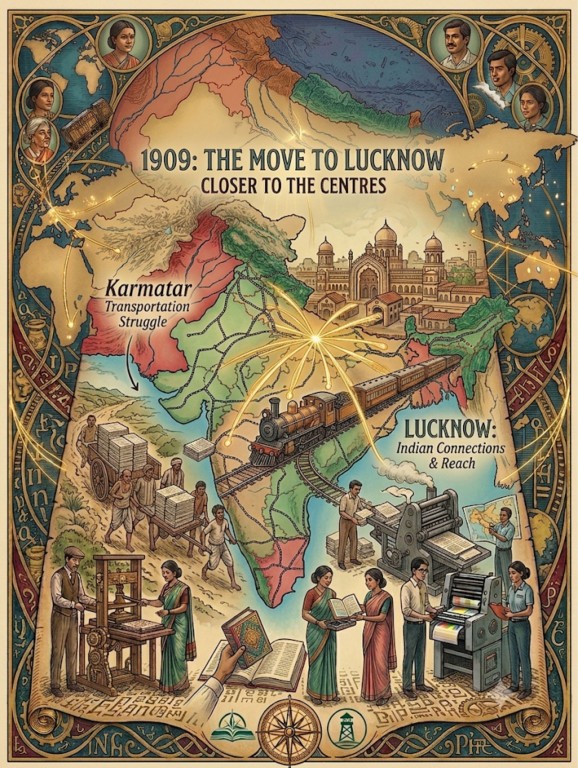
Karmatar presented its own challenges, particularly the transportation of paper and printing supplies from Calcutta.
In 1909, the Publishing House moved to Lucknow — a more central city with better connections across India, and new opportunities for the ministry to expand its reach.
Chapter 07 · 1924
Pune
Finding a Permanent Home
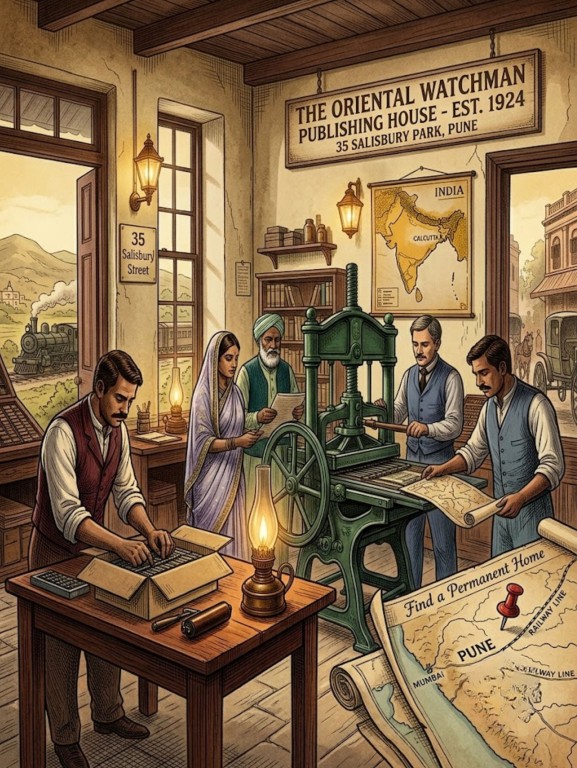
Following the reorganization of the India Union Mission and the establishment of the Southern Asia Division, a search began for a home for both the division headquarters and the publishing house.
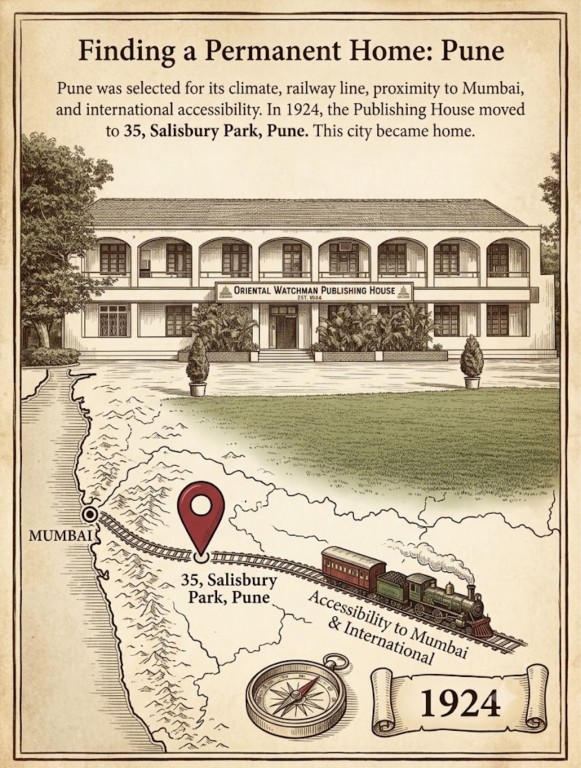
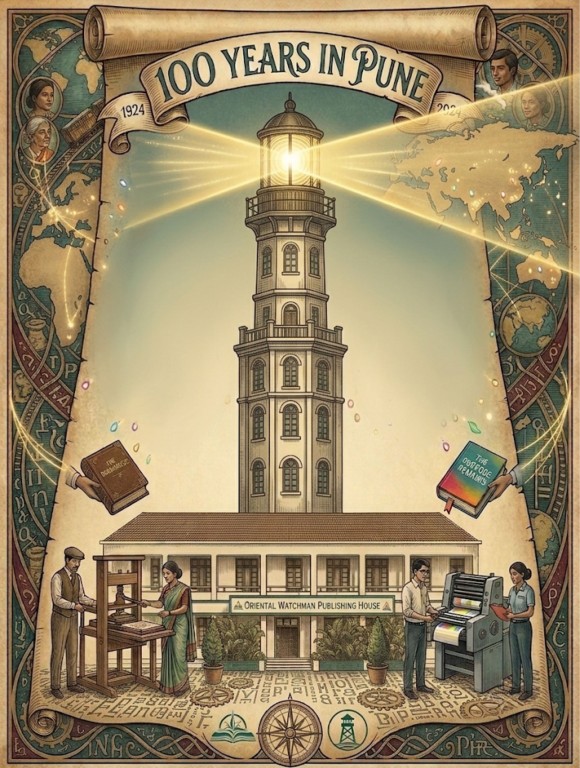
Pune was selected for its climate, railway line, proximity to Mumbai, and international accessibility. In 1924, the Publishing House moved to 35, Salisbury Park, Pune. This city became home.
Chapter 08 · 1929
A New Recognition
An Official Publishing Ministry
As the work continued to grow, the importance of Oriental Watchman Publishing House within the Adventist publishing ministry became increasingly recognized.
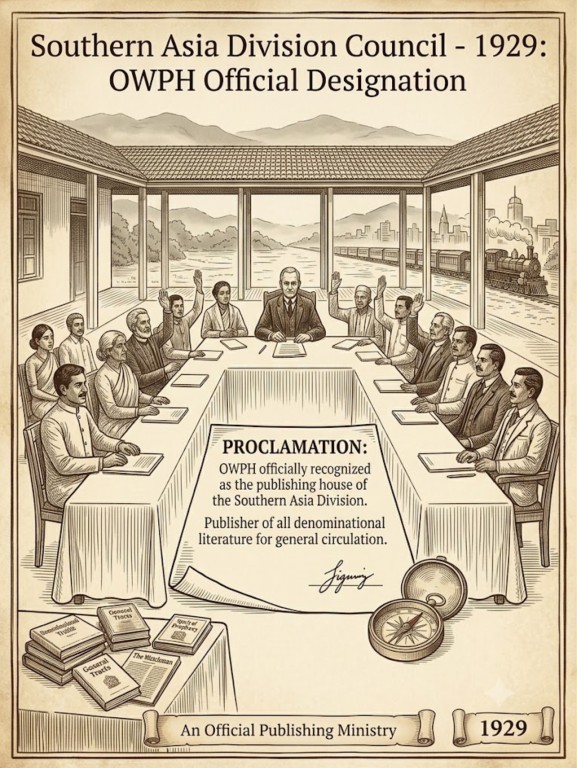
At the Southern Asia Division Council held in Poona in 1929, OWPH was recognized as the official publishing house of the Southern Asia Division, and as the publisher of denominational literature for general circulation.
Chapter 09 · 1965
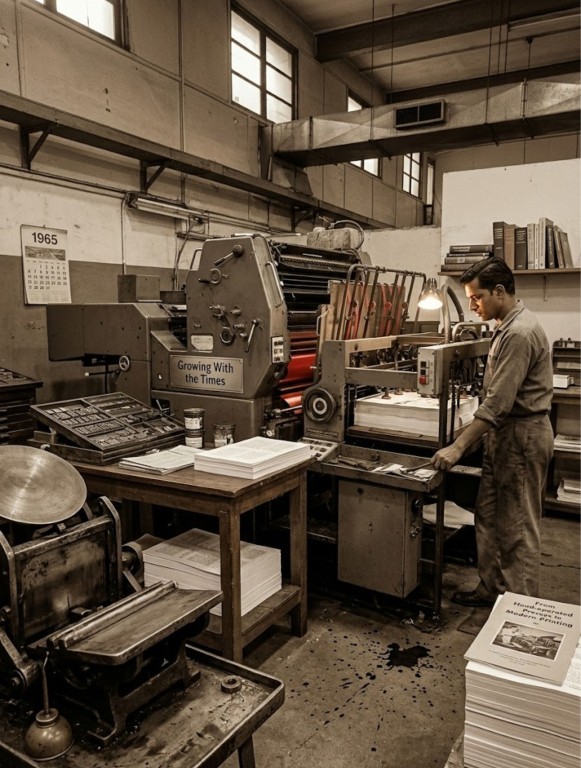
From Hand-operated Presses to Modern Printing
Growing With the Times
Each generation of technology served the same purpose: to help more literature reach more people.
1965 — a British Mann Master Junior offset press. 1973 — Solna 132, Heidelberg cylinder, book-sewing and high-speed cutting. 1982 — photo-typesetting and the computer age. 1987 — advanced printing, film processing, and folding equipment.
Chapter 10 · 2024
One Hundred Years in Pune
A Century Celebrated
In 2024, Oriental Watchman Publishing House celebrated its Centenary in Pune, marking 100 years since the Publishing House made this city its home.
It was a celebration of authors, editors, translators, designers, printers, binders, distributors, leaders, workers, and readers. A century has passed. The purpose remains.